
Landscape Photography: Essential Gear and Tips for 2026
Landscape Photography: Essential Gear and Tips for 2026
Summary: Strong landscape images depend on light, composition, timing, and preparation far more than expensive equipment. Photograph during the golden hour, work with a wide-angle lens and a stable tripod, and add polarizing and neutral density filters. With patience and planning, you will transform ordinary scenery into memorable, atmospheric photographs.
A single frame can hold the silence of a mountain valley or the rush of a coastal tide, yet the difference between a snapshot and a striking image rarely comes down to the camera. The art of landscape photography rests on understanding light, reading weather, and preparing before you ever reach the location. If you are drawn to the quiet, contemplative side of the craft, our exploration of landscape photography as a study of silence offers a useful starting point.
The wider industry reflects this enduring appeal. The global photography services market was valued at around USD 63.3 billion in 2026, with steady growth projected through the next decade. Behind those figures sits a simple truth: demand for compelling outdoor imagery keeps rising, and the skills below will help your work stand out.
Why Light and Timing Shape Every Landscape
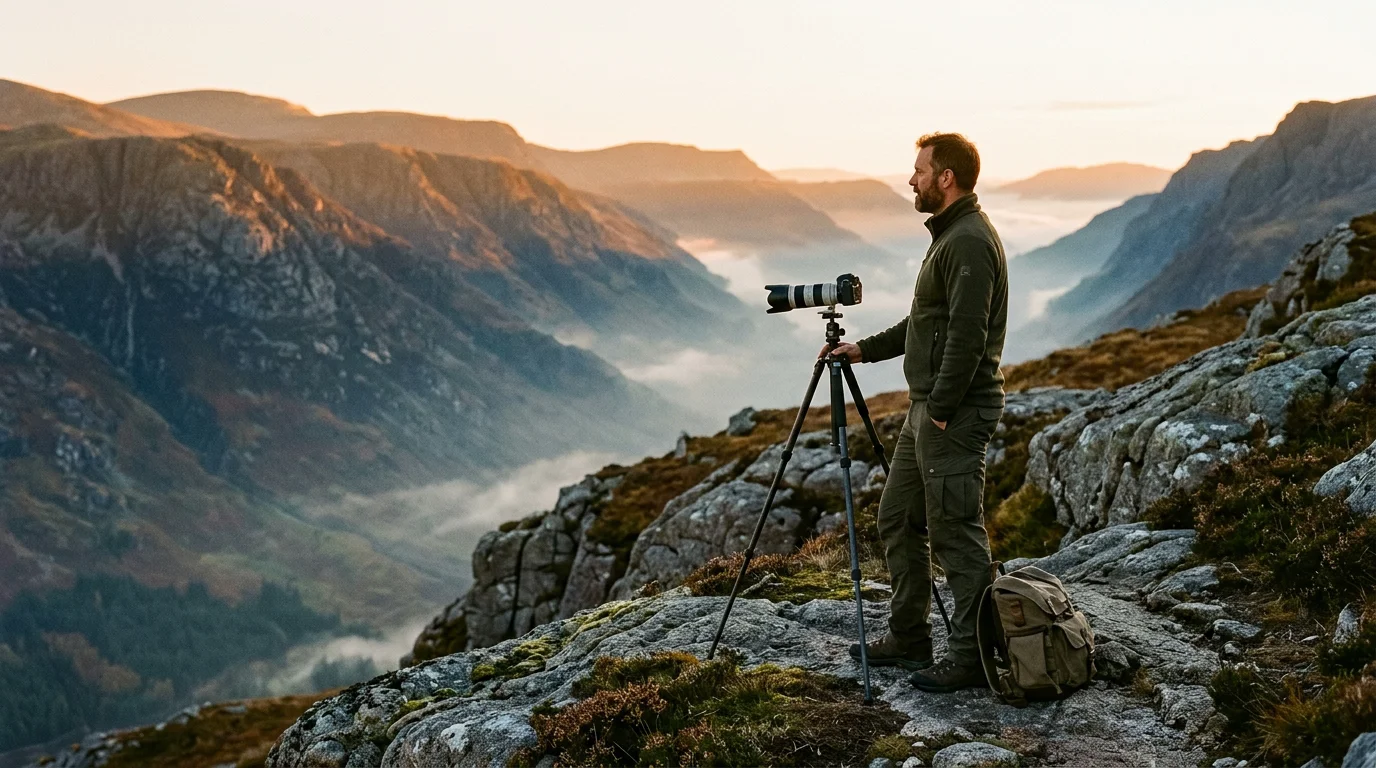
Ask any experienced photographer what matters most, and the answer is rarely gear. It is light. The best moments for capturing outdoor scenery often occur during the golden hour, shortly after sunrise or just before sunset, when the sun sits low and casts warm, directional light across the terrain.
Soft light, drifting clouds, mist, and shifting weather all add depth and atmosphere to a scene. A flat midday sky tends to flatten contours, while a breaking storm or a bank of fog can transform an ordinary hillside into something memorable. This is why planning around weather and the position of the sun rewards patience. Light at dawn or dusk consistently produces the richest colors and the most three-dimensional sense of place.
Choosing Lenses for Wide Views and Distant Details
Lens choice defines how you frame the land. A wide-angle lens, such as a 16 to 35mm, is well suited to sweeping vistas, allowing you to include an expansive foreground and a dramatic sky in a single composition. The wider the angle, the greater the apparent distance between foreground and background elements.
A telephoto zoom, such as a 70 to 200mm, works in the opposite direction. It isolates distant details, compresses layers of hills or ridgelines, and lets you build tighter, more graphic compositions from a single viewpoint. Many photographers carry both, because the two focal ranges answer different creative questions. According to equipment analysts, ultra-wide zooms and graduated neutral density filter systems anchor most serious landscape kits.
The Tripod: Your Most Underrated Tool
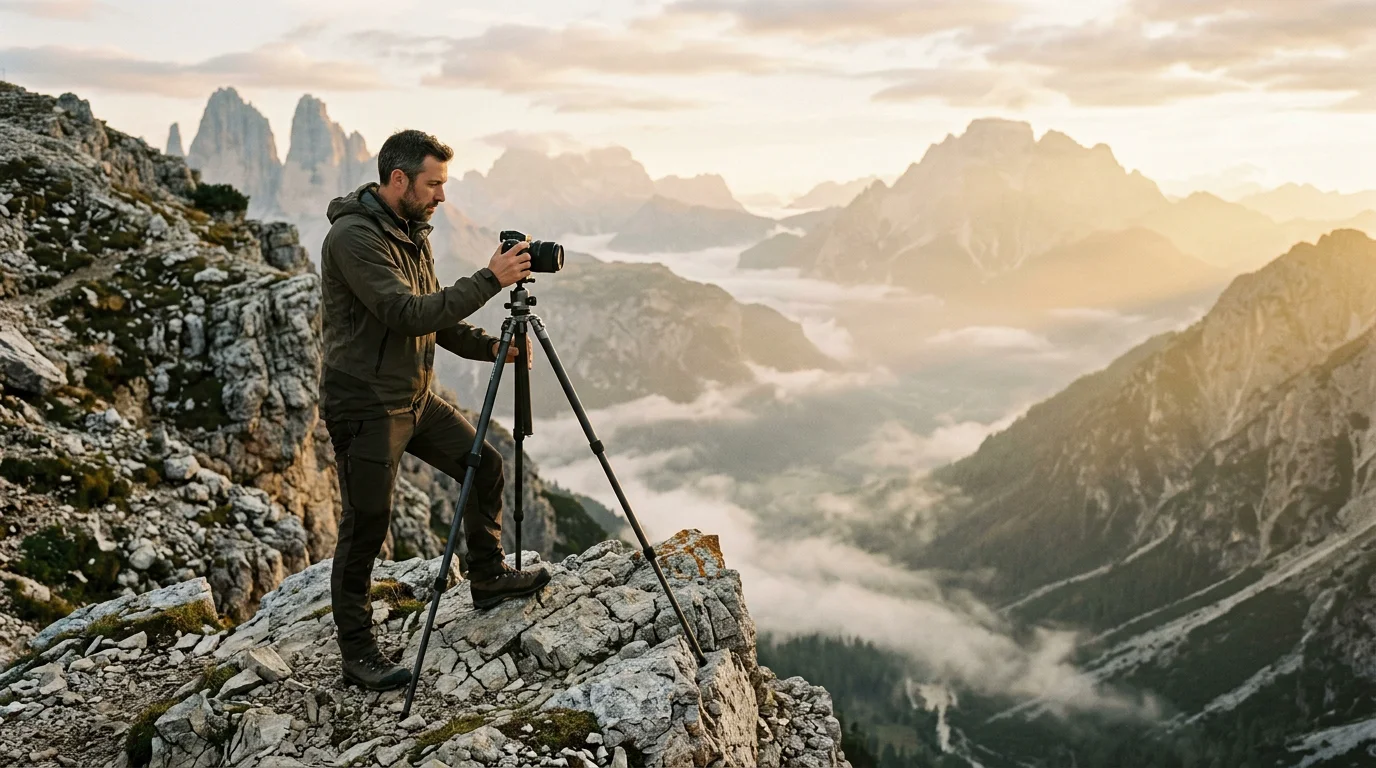
Imagine standing at a waterfall as the last light fades. To render the water as a smooth veil, you need a slow shutter speed, and at that point a stable tripod becomes indispensable. It eliminates the camera shake that ruins low-light frames, long exposures, waterfalls, and seascapes.
A tripod also slows you down in a productive way. Once the camera is fixed, you compose deliberately, refine the framing, and wait for the decisive light rather than firing quickly and hoping. Pair it with a remote release or the camera’s self-timer to avoid introducing vibration when you press the shutter. For photographers who travel far to reach their locations, our reflection on travel photography between instinct and vision explores how preparation and intuition work together in the field.
Essential Accessories and Recommended Settings
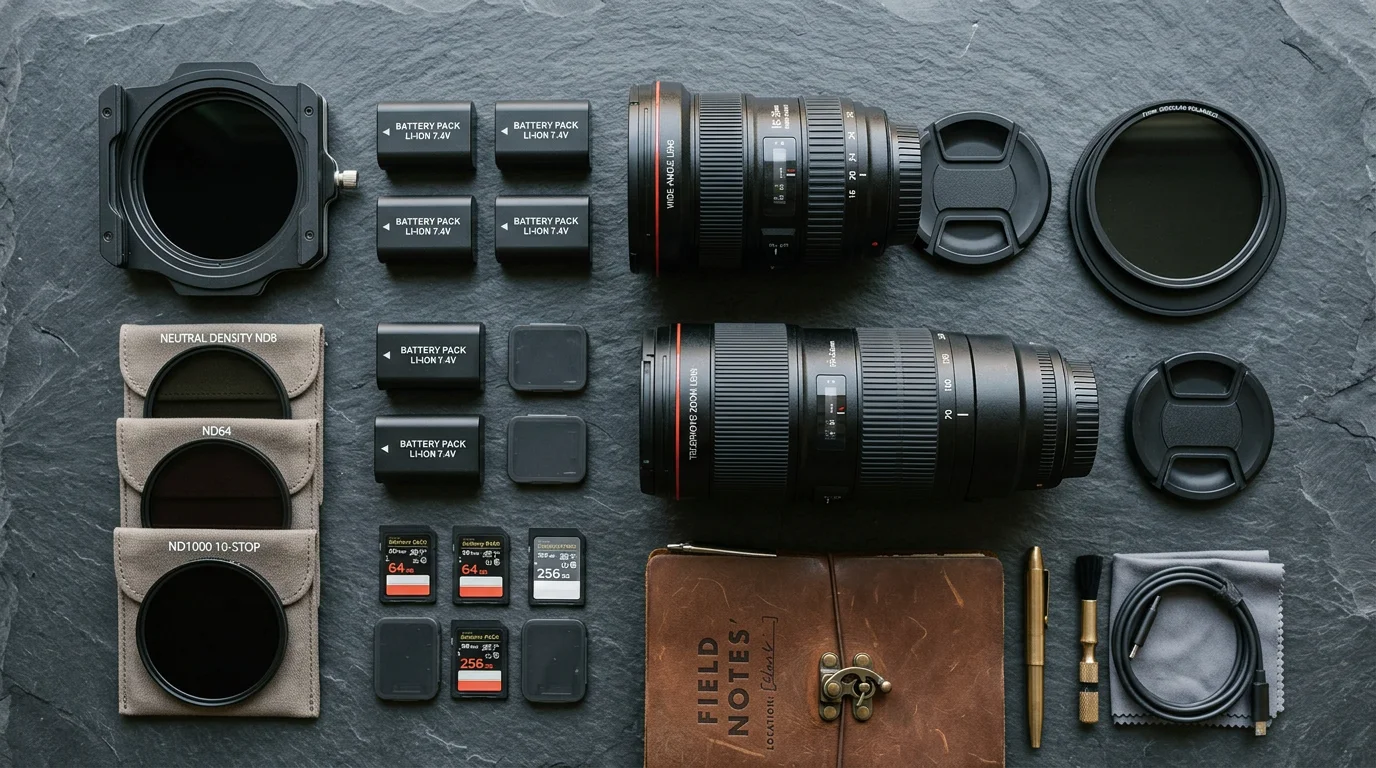
Beyond lenses and a tripod, a small set of accessories makes a disproportionate difference. A polarizing filter reduces reflections on water and foliage while deepening blue skies. A neutral density filter cuts the light entering the lens, enabling the long exposures that blur water and moving clouds. Do not overlook the practical items either: spare batteries, extra memory cards, and a cloth to protect the lens from spray and dust.
Camera settings follow a few reliable principles. Most landscape photographers favor a small aperture, often between f/11 and f/13, to keep the whole scene sharp, paired with a low ISO of 100 or 200 for maximum image quality. The table below summarizes a practical starting kit.
| Item | Typical choice | Primary purpose |
|---|---|---|
| Wide-angle lens | 16 to 35mm | Sweeping vistas and foregrounds |
| Telephoto zoom | 70 to 200mm | Isolating distant details |
| Tripod | Sturdy, lightweight | Sharpness in low light |
| Polarizing filter | Circular | Cutting glare and reflections |
| Neutral density filter | Variable or fixed stops | Long exposures |
Composition and Planning: Where Great Images Are Made
Why do two photographers at the same viewpoint return with such different results? The answer is usually composition and planning. Classic guidelines such as the rule of thirds, leading lines, balance, and framing give a scene structure and guide the viewer’s eye toward your subject.
Planning extends this discipline before you leave home. Professionals scout locations, study the direction of sunrise and sunset, and often return to a place several times to catch the right conditions. The photography market continues to reward this level of craft, with the broader photographic services market expanding at a healthy annual rate as clients increasingly seek work that stands out. To turn individual frames into a coherent body of work, our guide on how travel images become visual stories is a valuable companion.
Bringing It All Together in the Field
Mastering landscape photography is less about acquiring gear and more about developing patience, observation, and intention. Return to locations, chase the soft light of dawn and dusk, and let composition guide every frame. A wide-angle lens, a telephoto zoom, a stable tripod, and a couple of filters cover nearly every situation you will meet outdoors. The rest comes from time in the field, careful planning, and a willingness to wait for the moment when light and landscape align.
Take action with Art Vision Awards
Once your outdoor images begin to feel truly your own, the natural next step is to share them with a wider audience and place them before experienced eyes. Recognition can sharpen your growth as an artist and open doors to new opportunities.
We run the International Photography Competition 2026, where photographers and visual artists worldwide submit their work for review by an international professional jury. Selected entrants can earn cash prizes, digital certificates, editorial publication in AVA Magazine, and social media visibility. Explore our Art Vision Awards Photography section to learn how submission plans, jury evaluation, and award tiers work, then start for free.
Frequently Asked Questions
What is the best time of day for landscape photography?
The golden hour, shortly after sunrise or before sunset, generally produces the most flattering light. The sun sits low and warm, revealing texture and depth. Overcast skies, mist, and changing weather can also create striking, atmospheric conditions.
Do I need an expensive camera to start?
No. Composition, light, and planning matter far more than the price of your equipment. A capable camera, a wide-angle lens, and a sturdy tripod are enough to produce professional-quality images once you master technique.
Which lens should I buy first for landscapes?
A wide-angle lens in the 16 to 35mm range is the most versatile starting point for sweeping views. As your work develops, a 70 to 200mm telephoto zoom lets you isolate distant details and build tighter compositions.
Why is a tripod so important?
A tripod eliminates camera shake during low-light shooting, long exposures, waterfalls, and seascapes. It also encourages a slower, more deliberate approach to composition, which often improves the final result.
How can I gain recognition for my landscape work?
Sharing your images with juries and audiences accelerates your growth as a photographer. Through our International Photography Competition 2026, you can submit work for professional jury review, with opportunities for prizes, editorial publication, and wider visibility.
Comments are closed.