How to Identify a Legitimate Photography Competition in 2026
How to Identify a Legitimate Photography Competition in 2026
Summary: A trustworthy photography competition publishes clear rules before payment, names a verifiable jury, protects your copyright, and lists past winners you can check. Warning signs include cold messages promising selection, hidden fees, and vague ownership terms. Verifying transparency, judging methods, and prize structures separates credible awards from image grabs.
Some estimates suggest that a large share of online photography contests offer little real value, yet talented photographers keep entering them every month. The difference between a career milestone and a wasted entry fee often comes down to a few verifiable details. Learning to recognize a legitimate photography competition protects both your work and your budget, and it starts with knowing exactly what to check before you upload a single frame. Our guide to how competitions are judged explains the mechanics behind credible evaluation.
Contests have multiplied alongside the popularity of the medium itself. As Fstoppers notes, photography is far more popular than a decade ago, and so are the contests, with respected magazines and organizations now competing for attention against websites, e-magazines, and social accounts. That crowded landscape makes verification a practical skill rather than an optional one.
What makes a photography competition trustworthy
Credibility is rarely about the size of the prize. It is about transparency. A serious contest states its rules, categories, deadlines, and judging criteria openly, before you commit any money. It identifies who runs it, who judges it, and what happens to your images afterward. When any of those elements is hidden or deliberately vague, caution is warranted.
Reputation is measurable. Look at the roster of previous winners and finalists, then confirm that those photographers and the results actually exist. A credible award leaves a public trail: archived galleries, named jurors, and a consistent history across several editions. If a competition cannot point to who won last year, that absence is itself an answer.
- Published rules available in full before payment.
- A named, verifiable jury with checkable professional backgrounds.
- Clear copyright terms that leave ownership with the photographer.
- A visible archive of past winners and finalists.
- Transparent entry fees and a defined prize breakdown.
Warning signs of contest scams
Consider a message that lands in your inbox announcing that your work has been noticed and personally selected for a prestigious award. It feels flattering. It is also one of the clearest red flags in the field. Genuine awards do not scout individual entrants through mass private messages, and a “you have been chosen” note has usually reached thousands of recipients at once.
Fees deserve scrutiny too. Reasonable entry costs are normal and fund judging, promotion, and prizes. The problem begins when a contest refuses to reveal its rules until after you pay, or when the fee structure feels designed purely to extract money. As Fstoppers observed in its reporting, a contest that forces you to pay merely to read the competition rules reads like a scam, and every serious organizer should show the terms before any transaction. Treat urgency, pressure to buy a catalog, and repeated upsells as reasons to slow down and research.
How judging and verification separate credible awards
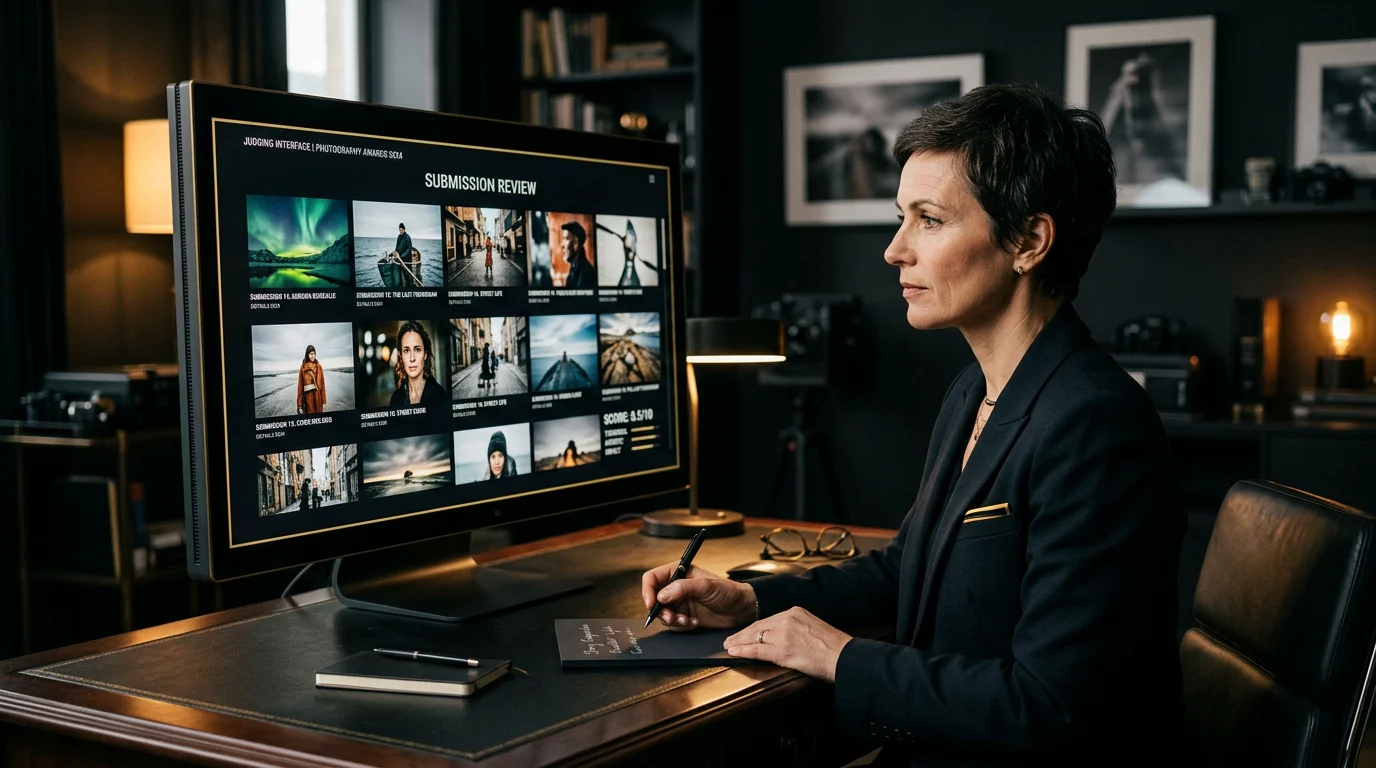
A meaningful award can explain how it reaches a decision. Blind judging, where entries are assessed without the photographer’s name attached, is a strong signal of fairness. So is a defined evaluation framework built around originality, technical skill, and visual impact rather than popularity votes alone.
Authentication has become central. The World Press Photo Contest runs multiple verification processes and asks shortlisted entrants to provide the original camera file, such as a RAW frame or a full-format JPEG delivered directly by the camera. That level of rigor demonstrates a commitment to authenticity that casual contests cannot match. When you evaluate an award, ask whether it takes provenance and manipulation rules seriously. If you want to strengthen your odds within a fair process, our advice on how to prepare a strong international photo contest submission walks through selection and presentation.
The AI question: transparency about what you are entering
Few issues have tested the integrity of competitions as sharply as generative imagery. In 2023, German artist Boris Eldagsen won the Creative Open category of the Sony World Photography Awards, then publicly refused the prize. According to CBS News reporting, he submitted an image generated with artificial intelligence to test whether the contest was prepared for such entries, and concluded that it was not.
The episode matters for anyone assessing an award. Eldagsen argued that AI images and photographs are different entities that should not compete against each other, and he even coined the term “promptography” in his BBC interview to mark that distinction. A trustworthy competition in 2026 states its position on AI-generated and heavily manipulated work plainly in its rules. Ambiguity on this point is no longer acceptable, and clarity signals an organizer that takes its own credibility seriously.
Entry fees, rights, and the fine print
Read the rights clause before anything else. Some contests quietly claim broad, perpetual, royalty-free licenses to your images, effectively turning a competition into a stock library. A credible award lets you retain copyright and attributes your work whenever it is displayed. Language granting the organizer unlimited rights to publish, adapt, sublicense, and merchandise your submission without further compensation is a reason to decline.
Prize structures should be concrete rather than aspirational. Look for named amounts, a defined number of placements, and clarity on non-cash benefits such as publication or exhibition. Vague promises of “exposure” with no verifiable audience carry little weight. The strongest indicator remains consistency: an award that has paid and promoted real winners across several editions has already demonstrated what it will do with yours.
A practical checklist before you enter
Before committing, run each contest through the same short evaluation. The table below compares the signals that distinguish credible awards, cautionary contests, and outright scams, so you can classify an opportunity quickly.
| Criterion | Credible award (e.g. Art Vision Awards) | Cautionary contest | Likely scam |
|---|---|---|---|
| Rules before payment | Full rules published openly | Partial or buried terms | Rules locked behind a fee |
| Jury | Named, verifiable panel | Vague credentials | No jury identified |
| Copyright | Retained by the photographer | Broad shared license | Full transfer demanded |
| Prizes | Defined cash and publication | Unclear “exposure” | Prize never delivered |
| Recruitment | Open public call | Frequent upsells | Cold “you were selected” messages |
Once a competition clears these checks, focus your energy on the entry itself. Selecting your strongest image for a specific brief has value regardless of the result, because the discipline sharpens your editing eye. If you are mapping your calendar, our overview of 2026 photography competitions helps you plan where credible submissions are worth your time.
Final thoughts on choosing wisely
Identifying a legitimate photography competition is a repeatable habit, not a guess. Verify the rules, the jury, the rights, and the record of real winners before you pay, and treat unsolicited “selection” messages with healthy skepticism. When an award is transparent about judging, authentication, and its stance on AI, entering becomes a considered investment in your visibility rather than a gamble. Apply the same scrutiny every time, and your submissions will consistently reach contests that reward genuine craft.
Take action with Art Vision Awards
You have learned what a credible award looks like, so the next step is to apply those standards to a competition built around transparency, professional evaluation, and real recognition. We designed our program for photographers and visual artists who want their work reviewed on its merits.
Through our international photography awards competition, your submissions are assessed by a named international jury on quality, originality, and visual impact. Selected work can earn cash prizes, an official certificate, editorial publication in AVA Magazine, and international social media visibility, with premium placements adding a physical statuette. Flexible submission plans of one, four, or seven entries let you start on your own terms while retaining recognition of your craft.
Frequently Asked Questions
How can I tell if a photography competition is legitimate?
Check that the full rules are available before payment, that the jury is named and verifiable, and that past winners can be confirmed publicly. Legitimate awards also let you keep your copyright. If any of these elements is hidden, treat it as a warning sign.
Are entry fees a sign of a scam?
Not necessarily. Reasonable fees fund judging, prizes, and promotion, and many respected contests charge them. The concern arises when a contest hides its rules until after you pay or when the fee structure appears designed only to collect money.
Why do some contests ask for the original camera file?
Requesting a RAW or full-format file is a verification measure to confirm authenticity and detect manipulation. Serious awards such as the World Press Photo Contest use these checks on shortlisted entries. It is a positive signal, not an inconvenience.
How should a competition handle AI-generated images?
A credible competition states its policy on AI-generated and heavily manipulated work clearly in its rules. Ambiguity, as the 2023 Sony award controversy showed, undermines trust. Read the eligibility section closely before entering any category.
What does Art Vision Awards offer entrants?
We run an international competition where a named professional jury reviews submissions on quality, originality, and visual impact. Selected photographers can receive cash prizes, certificates, editorial publication in AVA Magazine, and social media visibility, with flexible entry plans available.
Comments are closed.