Photography Competitions in 2026: A Complete Entry Guide
Photography Competitions in 2026: A Complete Entry Guide
Summary: The 2026 season offers a dense calendar of international photography awards, most with deadlines between July and December and entry fees ranging from free to roughly thirty dollars. Choosing the right contest depends on your genre, career goals, and the recognition on offer. Careful preparation of a coherent series remains the single strongest predictor of success.
Photography has rarely been this crowded or this rewarding. The global photography market was valued at approximately $105.2 billion in 2023, and the pool of skilled image makers seeking visibility keeps expanding. If you are searching for the leading photography competitions 2026 has to offer, you are joining thousands of photographers who treat awards as a genuine career catalyst. At our photography contests, we observe this appetite for recognition growing every season.
Awards do more than hand out trophies. They open doors to editorial publication, exhibition, and the professional endorsements that shape a portfolio. According to industry figures, the market is projected to reach $161.8 billion by 2030, which means competition for attention will only intensify. Understanding the landscape now gives you a measurable advantage.
Why entering a photography competition matters this year
Consider what a single placement can achieve. A jury endorsement from a respected editor or curator functions as third-party validation that clients and galleries recognize instantly. In a field reshaped by automation, that human judgment carries renewed weight. According to a 2024 industry survey, 42% of photographers reported that artificial intelligence already speeds up their culling process by at least a quarter, which pushes the creative differentiation toward vision rather than volume.
Awards also compress years of networking into a few weeks. Winning work travels through international photography magazines, social platforms, and touring exhibitions, reaching audiences that individual promotion rarely touches. For emerging photographers in particular, an award listing on a résumé signals credibility to editors who receive hundreds of pitches. This is why a structured awards strategy belongs in every serious photographer’s yearly plan.

The major photography competitions and deadlines in 2026
The current calendar is unusually rich, with most international deadlines clustered between late July and mid-December. Several long-running programs are already open for entries, and a few extend into early 2027. Ranked coverage from Digital Camera World confirms that many of these awards now pair cash prizes with physical exhibitions, adding tangible exposure to any placement.
The table below compares a selection of contests active during the 2026 cycle. Figures reflect the published details for this season and may vary by category or entry tier.
| Competition | Entry fee (2026) | Prizes and recognition | Key benefit |
|---|---|---|---|
| Art Vision Awards 2026 | Plans for 1, 4, or 7 entries | Up to €2,500 in cash, €1,000 for first place | Jury review, AVA Magazine publication, Cannes ceremony invitation for premium winners |
| Fine Art Photography Awards | $19 single / $24 series | $5,000 total prize pool | Nineteen thematic categories |
| World Press Photo Contest | Free | Up to €11,000 | Touring exhibition and documentary focus |
| ND Awards | Paid, tiered | Cash and certificates | Broad category range |
Among these options, we designed our own program to combine cash recognition with editorial reach, which is why photographers weighing their choices often review our photography awards alongside the field. The right shortlist depends on your genre and your goals rather than on prize size alone.
Entry fees, prizes, and what your money buys
How much should you expect to pay? Fees across the 2026 season range from completely free, as with major photojournalism awards, to roughly fifteen to thirty-five dollars or euros per entry for fine art and open-theme contests. Early-bird pricing frequently rewards those who submit weeks ahead of the deadline, sometimes trimming a third off the standard cost.
Prizes vary just as widely. Some programs offer modest cash awards paired with valuable publication, while others emphasize exhibition and jury statements over money. When you assess value, weigh the total package: cash, certificates, editorial features, and the reputation of the jury. A smaller cash prize attached to a respected curatorial panel often outperforms a larger purse from an unknown organizer in terms of long-term career impact.
How to choose the competition that fits your work
Start with your body of work, not the prize list. A landscape specialist gains little from a portrait-only award, however prestigious. Match the categories to your existing strengths, then confirm the eligibility window, because many contests accept only images produced within a defined recent period.
Next, examine the jury. Named panels of editors, gallerists, and museum curators indicate a program that can genuinely advance your visibility. Read past winners to gauge whether the aesthetic aligns with yours. Finally, weigh the cost against the realistic benefit for your stage of career. Emerging photographers may prioritize free or low-fee entries with publication, while established professionals may target awards that carry exhibition and press coverage.

Preparing a submission that stands out
What separates a shortlisted entry from a rejected one? Coherence. Jurors reward a tight, consistent series far more often than a scattered collection of technically strong but unrelated frames. Sequence your images so they build a narrative, and remove any picture that dilutes the whole.
Strategic category selection also matters. According to Amateur Photographer, the chair of one leading wildlife jury advises entrants to target under-subscribed categories, where a smaller field statistically improves your odds. The same logic applies across genres: a distinctive angle on a less crowded theme can outperform a conventional take on a saturated one. For a detailed workflow, our guide to preparing a strong submission walks through sequencing, captions, and file preparation step by step.
Categories and themes shaping 2026
Which themes are drawing the most interest this year? Portrait and human-presence work continues to command strong attention, alongside documentary, street, and environmental storytelling. Open-theme categories remain popular because they welcome experimentation, while specialized fields such as aerial, macro, and night photography reward technical mastery.
If you are undecided, browsing recurring subject areas helps you match a strong image to the right slot. You can explore our photography contest themes to see how established categories are framed, which often clarifies where your portfolio fits best. Aligning your finest work with a well-chosen theme is one of the most reliable ways to raise your placement odds.
Your path through the 2026 awards season
The strongest approach to the photography competitions of 2026 is deliberate rather than opportunistic. Map the deadlines that suit your genre, budget realistically for entry fees, and invest the bulk of your energy in curating a coherent series rather than chasing every open call. Human jury endorsement remains a durable form of validation in an automated era, so treat each submission as a considered statement of your vision. Enter fewer contests, but enter them well.
Take action with Art Vision Awards
You have mapped the calendar, weighed the fees, and refined your series. The remaining step is to place your work in front of a panel equipped to recognize it. We built our program precisely for photographers and visual artists ready to move from preparation to submission with confidence.
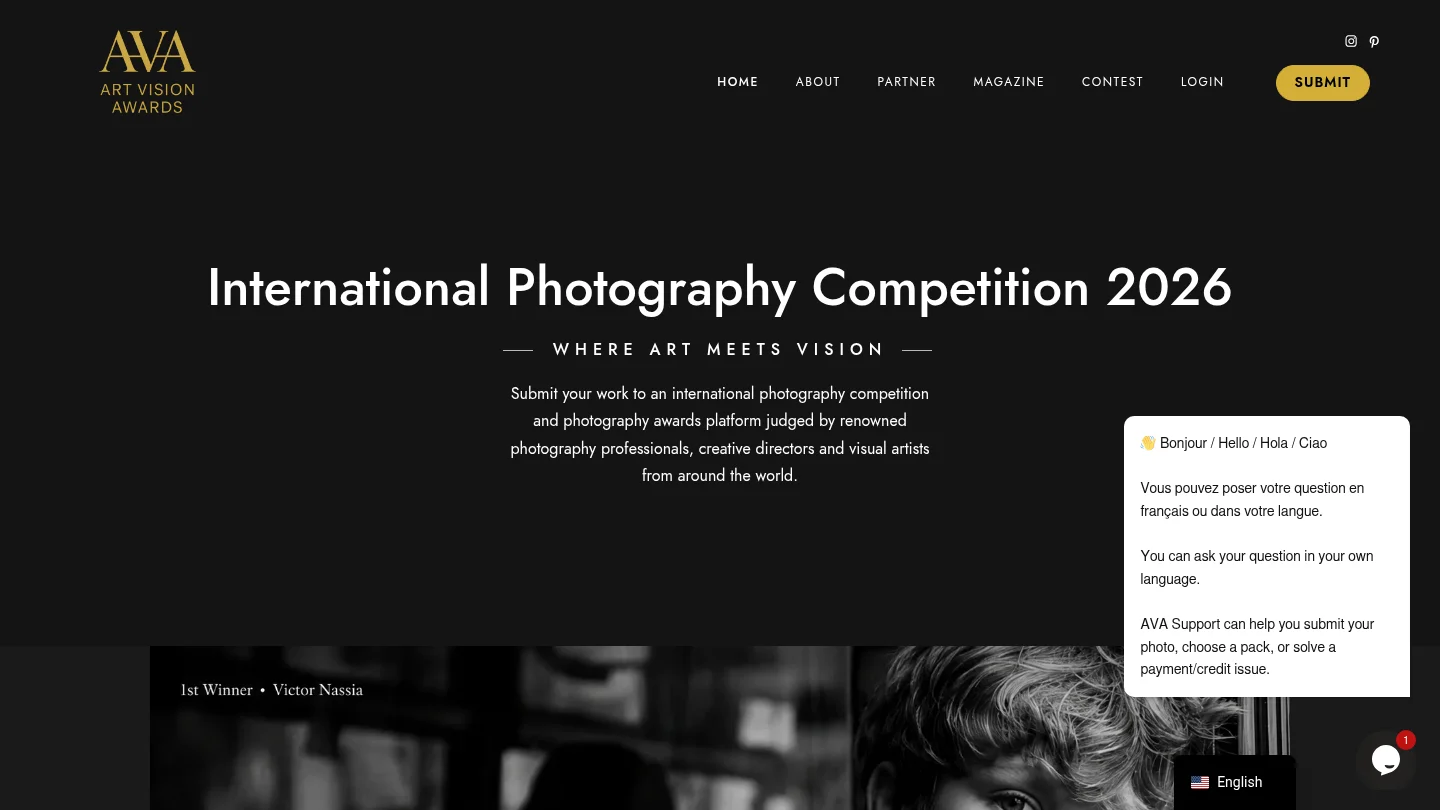
Through the Art Vision Awards 2026 international competition, your images are reviewed by an international professional jury, with the chance to earn cash prizes, editorial publication in AVA Magazine, and social media visibility. Flexible plans let you submit one, four, or seven entries, and premium placements include a physical statuette and an invitation tied to the ceremony in Cannes. You can start for free and subscribe for jury announcements.
Frequently Asked Questions
When do most photography competition deadlines fall in 2026?
The majority of international deadlines cluster between late July and mid-December 2026. Several programs remain open into early 2027, so it is wise to confirm each date directly with the organizer before you prepare your entry.
How much does it cost to enter a photography contest?
Fees in 2026 range from free, common among photojournalism awards, to roughly fifteen to thirty-five dollars or euros per entry for fine art and open-theme contests. Many programs offer reduced early-bird pricing for those who submit ahead of the deadline.
Are photography competitions worth the entry fee?
They can be, provided you choose carefully. A respected jury, editorial publication, and exhibition often deliver more career value than the cash prize alone. Weigh the full package against your goals rather than judging by prize size.
What makes a submission more likely to win?
A coherent, well-sequenced series consistently outperforms a scattered collection of strong single frames. Selecting an under-subscribed category and preparing clear captions and correctly formatted files also improves your odds meaningfully.
Can I submit my work to Art Vision Awards as an emerging photographer?
Yes. Our competition welcomes photographers and visual artists worldwide, and entry plans start with a single image. Emerging members can gain profile badge recognition, editorial consideration in AVA Magazine, and jury review of their work.

Comments are closed.